Telehealth vs. Remote Therapeutic Monitoring (RTM): Understanding the Differences and Benefits

As healthcare evolves, so does the language we use to discuss it. Two terms that often cause confusion are telehealth and Remote Therapeutic Monitoring (RTM). While both involve remote healthcare delivery, they serve different functions. Understanding these differences is crucial for healthcare providers looking to optimize patient care and practice efficiency.
In this article, we’ll explain
- What telehealth and RTM are
- How they function in physical therapy
- Why they are important
- How RTM can complement telehealth to help patients stay on track with their Home Exercise Programs (HEPs) and improve treatment outcomes
What Is Remote Therapeutic Monitoring (RTM)?
The Centers for Medicare and Medicaid Services (CMS) define RTM as the use of technology to collect and track patient data, such as compliance, pain levels, and functional progress.
1. How RTM Works
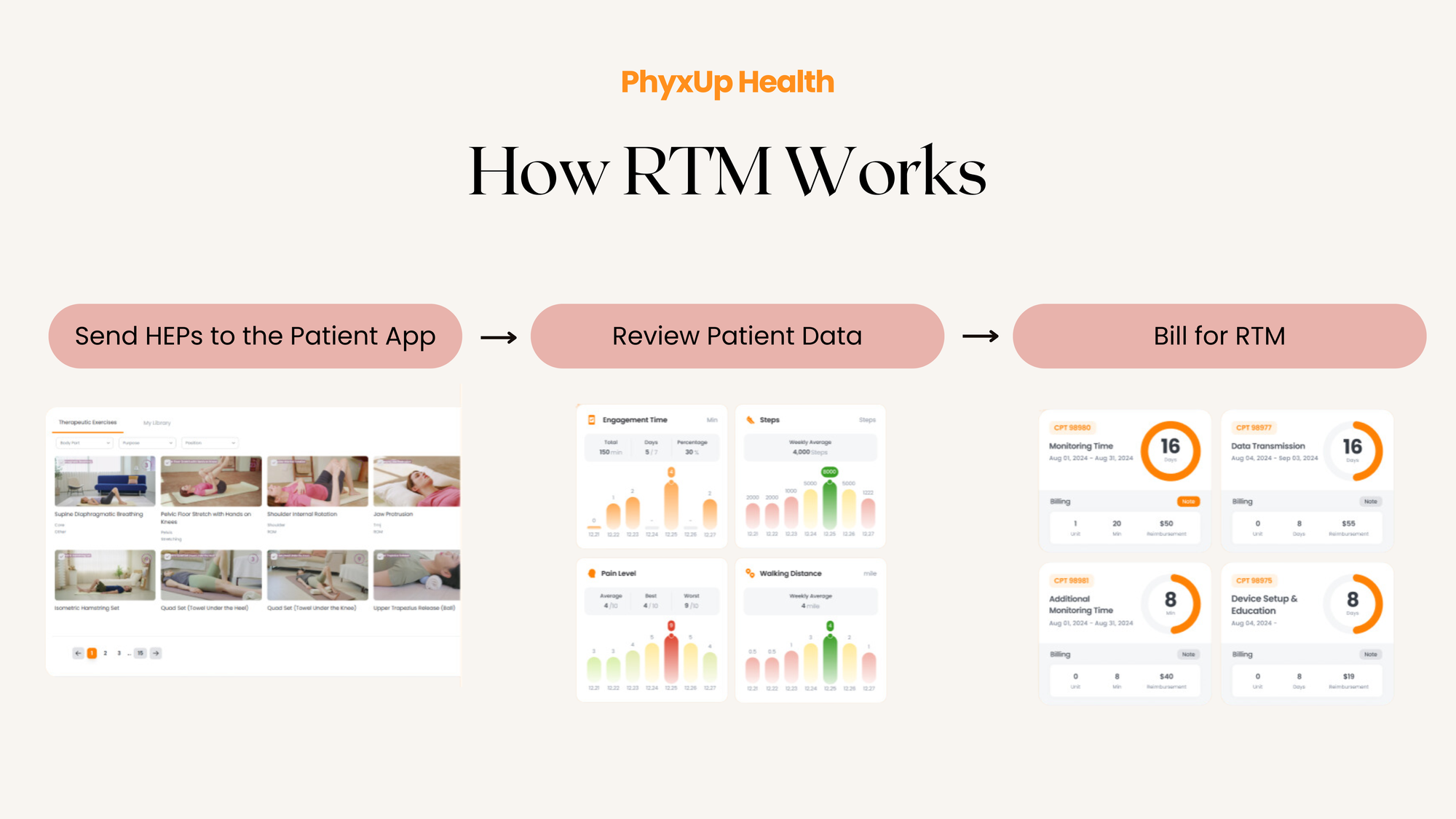
RTM enables therapists to track a patient’s progress without requiring frequent clinic visits. By using digital tools and mobile apps, patients can fill out health questionnaires, report symptoms, and receive feedback. This real-time tracking is especially beneficial for physical therapists managing multiple patients, allowing them to monitor progress efficiently without manually checking schedules.
2. Flexibility and Convenience
One of RTM’s biggest advantages is its flexibility. Unlike telehealth, which requires scheduled appointments, RTM can happen asynchronously. Patients log their progress at their convenience, and therapists review the data on their own time, making it easier to fit into a busy clinic schedule.
3. Enhancing Patient Engagement and Adherence
RTM is more than just data collection—it’s an engagement tool. Apps that provide reminders, progress tracking, and real-time feedback encourage patients to stay committed to their HEPs. Studies indicate that higher patient engagement leads to better recovery outcomes. Platforms like PhyxUp Health enhance patient participation through personalized feedback, improving adherence to prescribed treatments.
4. Reimbursement and Revenue Potential
With new Medicare billing codes introduced in 2022, physical therapists can now bill for RTM services separately from traditional sessions. This opens up additional revenue streams for clinics, supporting financial growth while improving patient outcomes.
What Is Telehealth?
Telehealth refers to live, real-time remote healthcare services, which can include:
- Virtual consultations
- Digital communication between healthcare providers and patients
According to the American Physical Therapy Association (APTA), telehealth plays a crucial role in increasing access to physical therapy services, especially for patients in rural areas or those with mobility limitations.
1. Real-Time Virtual Care
Telehealth allows therapists to conduct live, interactive sessions with patients, offering immediate assessments and treatment adjustments. This is particularly useful for post-surgical rehabilitation or injury recovery, where frequent check-ins are required.
2. Convenience and Accessibility
The primary advantage of telehealth is convenience. Patients can receive care without traveling, saving both time and costs. This accessibility can be a game-changer for patients who struggle with transportation or scheduling conflicts.
3. Comprehensive Patient Support
Telehealth enables therapists to provide a full spectrum of services, including:
- Virtual evaluations
- Patient education
- Counseling and follow-up care
This holistic approach ensures patients receive well-rounded support throughout their recovery.
Telehealth vs. RTM: Key Differences
While both telehealth and RTM use digital technology to support patient care, they differ in how and when care is delivered.
| Feature | Telehealth | Remote Therapeutic Monitoring (RTM) |
|---|---|---|
| Type of Interaction | Live, real-time sessions | Asynchronous data tracking |
| Purpose | Direct patient care & treatment | Monitoring patient progress |
| Data Collection | Subjective assessment during video call | Objective, ongoing data tracking |
| Billing Codes | Billed as evaluation/treatment | Separate RTM-specific billing codes |
| Best For | Virtual therapy sessions & follow-ups | Long-term patient monitoring & engagement |
Why RTM Matters for Physical Therapy
1. Improved Patient Outcomes
Research shows that patients who are monitored remotely demonstrate higher adherence to their exercise programs.
A study published in the Journal of Rehabilitation Research and Development found that RTM increased exercise adherence by 30%, leading to faster recovery times and improved long-term health.
2. Increased Clinic Efficiency
RTM helps physical therapists manage their time more effectively. By tracking patient progress remotely, therapists can reduce unnecessary in-person visits, ensuring they allocate their time to patients who need hands-on care the most. This increases clinic efficiency and profitability.
3. Data-Driven Personalized Care
RTM generates valuable patient data, allowing therapists to make informed clinical decisions. By analyzing trends in pain levels, mobility, and adherence, therapists can adjust treatment plans proactively, leading to better patient care.
4. Expanding Access to Care
By leveraging RTM, clinics can expand their reach to underserved populations, such as rural communities or patients with limited mobility. This ensures that more individuals receive the care they need, even if they cannot visit a clinic frequently.
Integrating RTM to Complement In-Person Visits
RTM is not a replacement for in-person visits—instead, it serves as a valuable supplement to traditional physical therapy care.
- In-person visits allow therapists to perform hands-on assessments and interventions.
- RTM ensures continuous care between visits, reinforcing patient adherence and tracking progress.
- By integrating both, clinics can enhance patient support while optimizing clinical efficiency.
Conclusion
Understanding the differences between telehealth and Remote Therapeutic Monitoring is essential for physical therapists aiming to modernize their practice. While telehealth facilitates live interactions, RTM focuses on tracking and improving patient engagement asynchronously.
Integrating RTM into physical therapy practices leads to:
- Better patient outcomes through consistent monitoring
- Increased efficiency by streamlining workflows
- New revenue opportunities with Medicare reimbursement codes
- Improved patient engagement through real-time feedback and motivation
PhyxUp Health offers comprehensive RTM solutions that help physical therapists seamlessly integrate remote monitoring, improve patient engagement, and enhance practice management.
By combining telehealth and RTM, therapists can deliver more effective care, empower patients, and grow their practice sustainably.